
Crypto’s First Real Bull Market? From Blockspace to Real Utility
Could crypto’s next major advance be driven by practical adoption as well as speculation? In his conversation with Raoul Pal, Ran Neuner argues that the industry may be entering its first real bull market: a phase in which blockchain infrastructure finds broader, lasting demand.
His distinction is about what drives a market cycle. Earlier rallies rewarded expectations about what crypto might become. Neuner’s thesis is that tokenization and emerging applications could now give that infrastructure a stronger economic purpose.
What the Relative-Strength Charts Reveal
Neuner highlights two charts: ETH/BTC and OTHERS relative to BTC. The first measures Ethereum’s performance against Bitcoin. He interprets its breakout as a potential sign of renewed strength in smart-contract applications. The second compares the market capitalization of cryptocurrencies outside the top ten with Bitcoin’s price. He points to a bounce from a longer-term trend line as evidence supporting his case for broader altcoin leadership.
These charts track relative strength. Ethereum or altcoins can rise in dollar terms while still underperforming Bitcoin. Sustained improvement against BTC would therefore strengthen the argument that participation is broadening. It would not, by itself, prove that adoption caused the move.
Blockspace Finds Its Purpose
Blockspace is the capacity blockchains provide to record transactions and execute applications. Neuner describes an industry that built substantial capacity before demand fully developed. His argument is that tokenization could help fill it.
That does not mean earlier blockchains had no function. Bitcoin enabled transfers without a central intermediary, while Ethereum supported programmable transactions. The larger opportunity is to extend those capabilities into more everyday financial activity.
Tokenized stocks, bonds, commodities, and other assets can use blockchain infrastructure to record ownership and support transfers. Stablecoins can provide a payment and settlement layer. As more activity moves on-chain, blockspace can become infrastructure serving users, rather than capacity valued mainly for its future promise. However, greater network usage does not automatically translate into higher prices for every associated token.
How CTA Participates
At CryptoTradingAcademe, we connect this longer-term thesis with systematic trading in Bitcoin, Ethereum, and selected altcoins. Our systems monitor price trends across multiple timeframes, using defined entry and exit rules to guide participation.
Our 20-minute MasterTrend strategy can use a higher-timeframe HMA/EMA filter to permit trades in the prevailing direction, while opposing signals move positions flat. This gives us a practical framework for responding as market conditions change.
An adoption-driven cycle could create substantial opportunities. Our approach is to require market confirmation and manage exposure throughout the journey.
Trade the evidence, not the narrative.
For educational purposes; not personalized investment advice.
Where are the markets today?
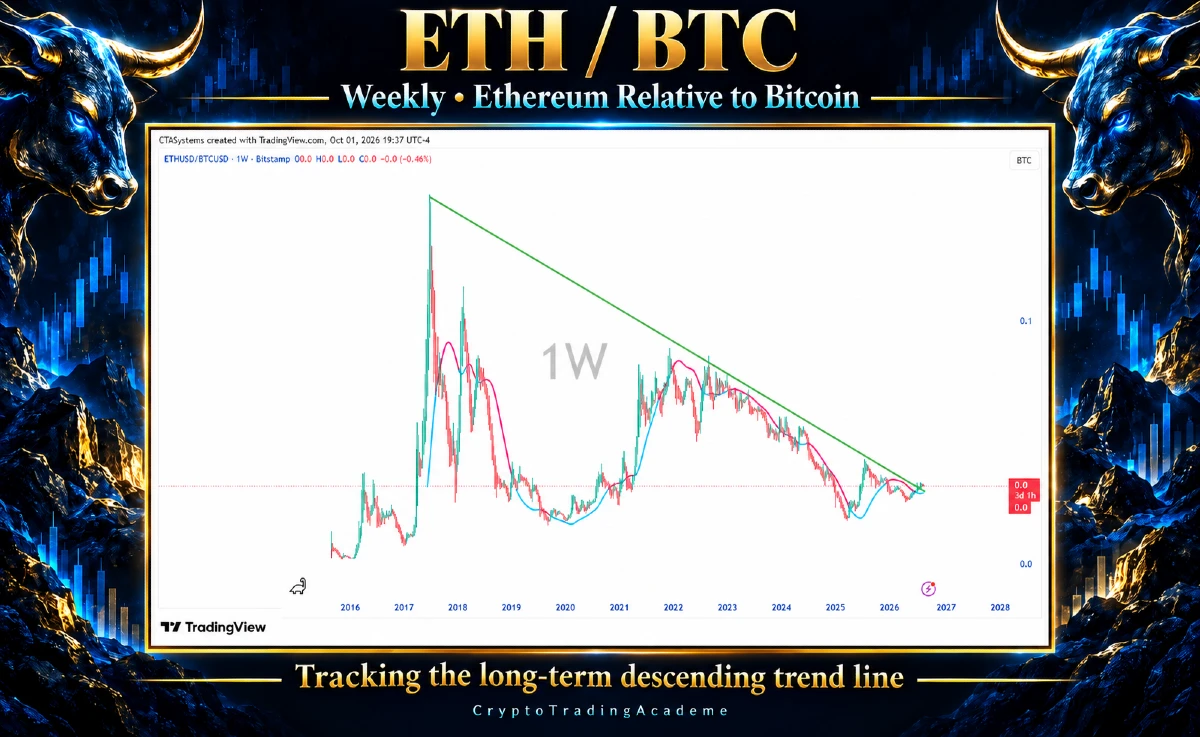
Ethereum versus Bitcoin: Weekly chart illustrates ETH turning up from cycle lows and about to breakout.
Ethereum versus Bitcoin: Weekly chart illustrates ETH turning up from cycle lows and about to breakout.
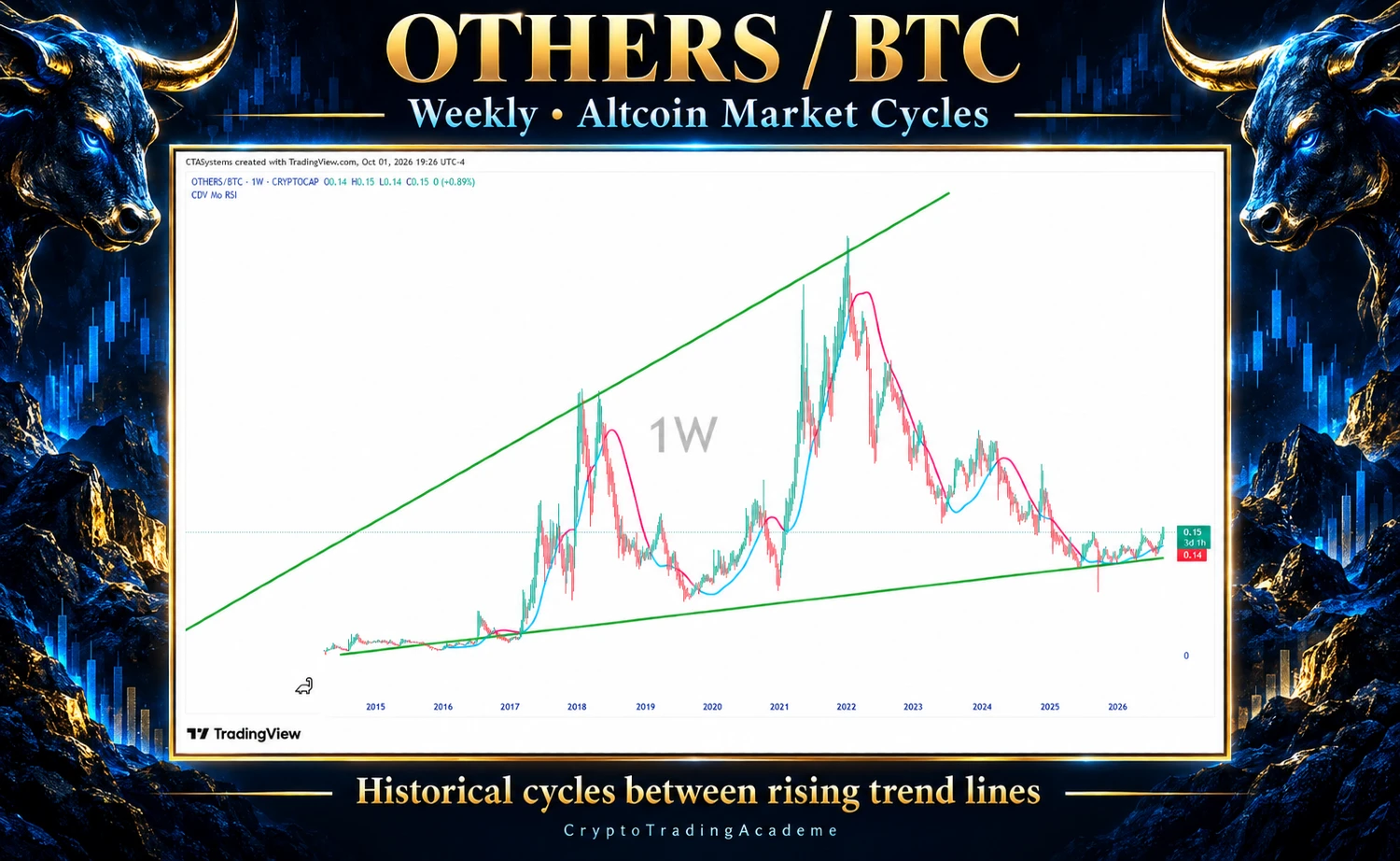
This chart illustrates all other ALT-Coins relative to Bitcoin as they turn from cycle lows. The upper trend line targets cycle highs.